Your HVA and the triggers that activate your plan
The Hazard Vulnerability Analysis (HVA) is built to the all-hazards structure surveyors expect: one row per hazard, a probability, and the columns of judgement only your facility can supply. Calchis fills the probability column from your county's federal record — thirty years of NOAA storm events and FEMA's declaration history — and prints the basis beside every figure. The judgement columns are left for you: a document that guessed your preparedness would be inventing the half that matters.
From the analysis to the triggers
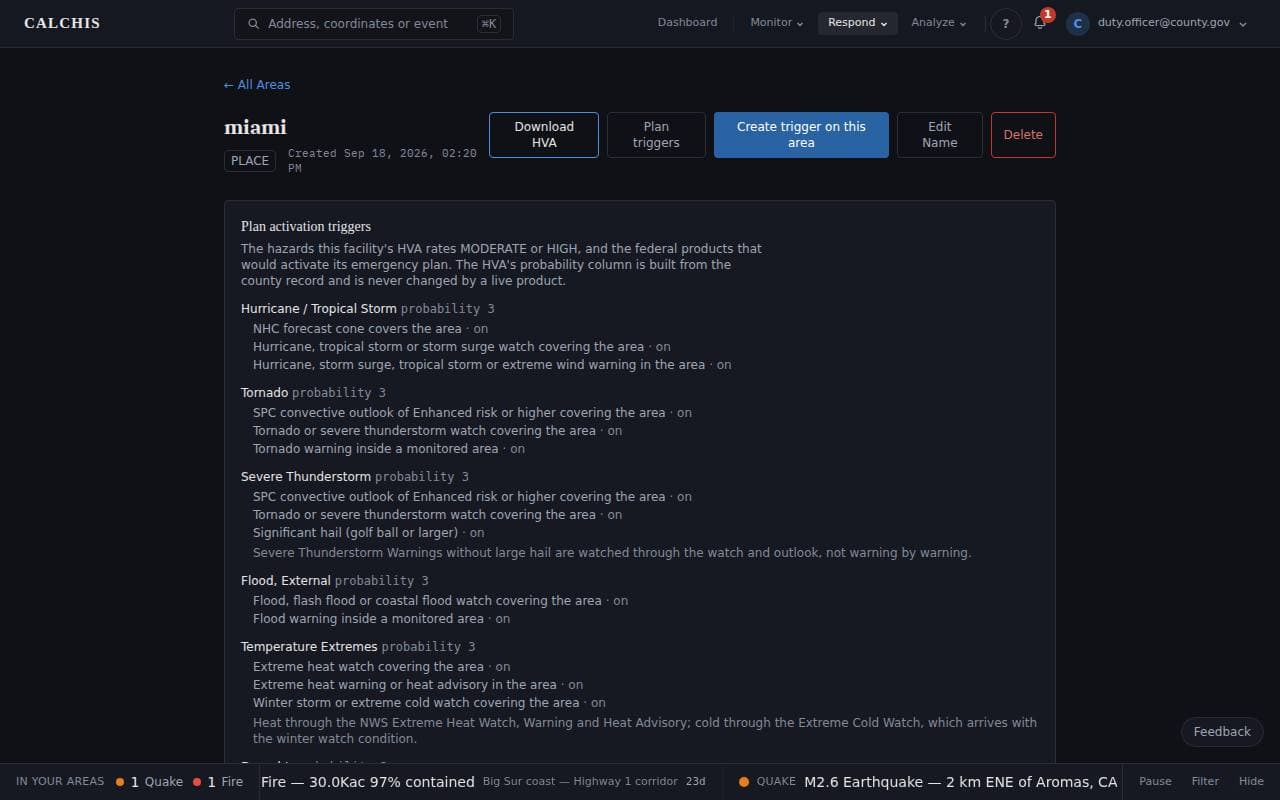
An emergency plan is built on its risk assessment, so the hazards your HVA rates as likely are the ones whose warnings should activate the plan. Plan triggers lists, for every hazard rated moderate or high, the conditions Calchis watches for it — the hurricane forecast cone and the tropical watch and warning for a coastal facility, the flood watch and warning, the fire weather watch and red flag warning — and whether each is switched on for your account.
Live products never change the HVA itself. The probability column is the county's record; a watch issued this morning does not move it.
Some hazards have no live federal product to watch — drought, dam failure, epidemic. Those rows say so, rather than leaving a blank that reads like an oversight.
For how to fill the analysis in — what each column asks, which three run the other way, and how to start this year from last year’s — see Completing your Hazard Vulnerability Analysis.
Step by step
Step 1: Open Plan triggers on an area
From the area's page, Plan triggers reads the HVA for that area and lists each rated hazard with its triggers and whether each is on. If any were switched off, one button turns them all back on.
Last updated September 18, 2026
Related Guides
Decision-support intelligence — not a primary alerting or dispatch system. Verify against official sources.Guides describe how the platform works; they are not a substitute for professional actuarial assessment or for the official guidance of the agencies responsible for an incident.